Should I Use Dating Apps?

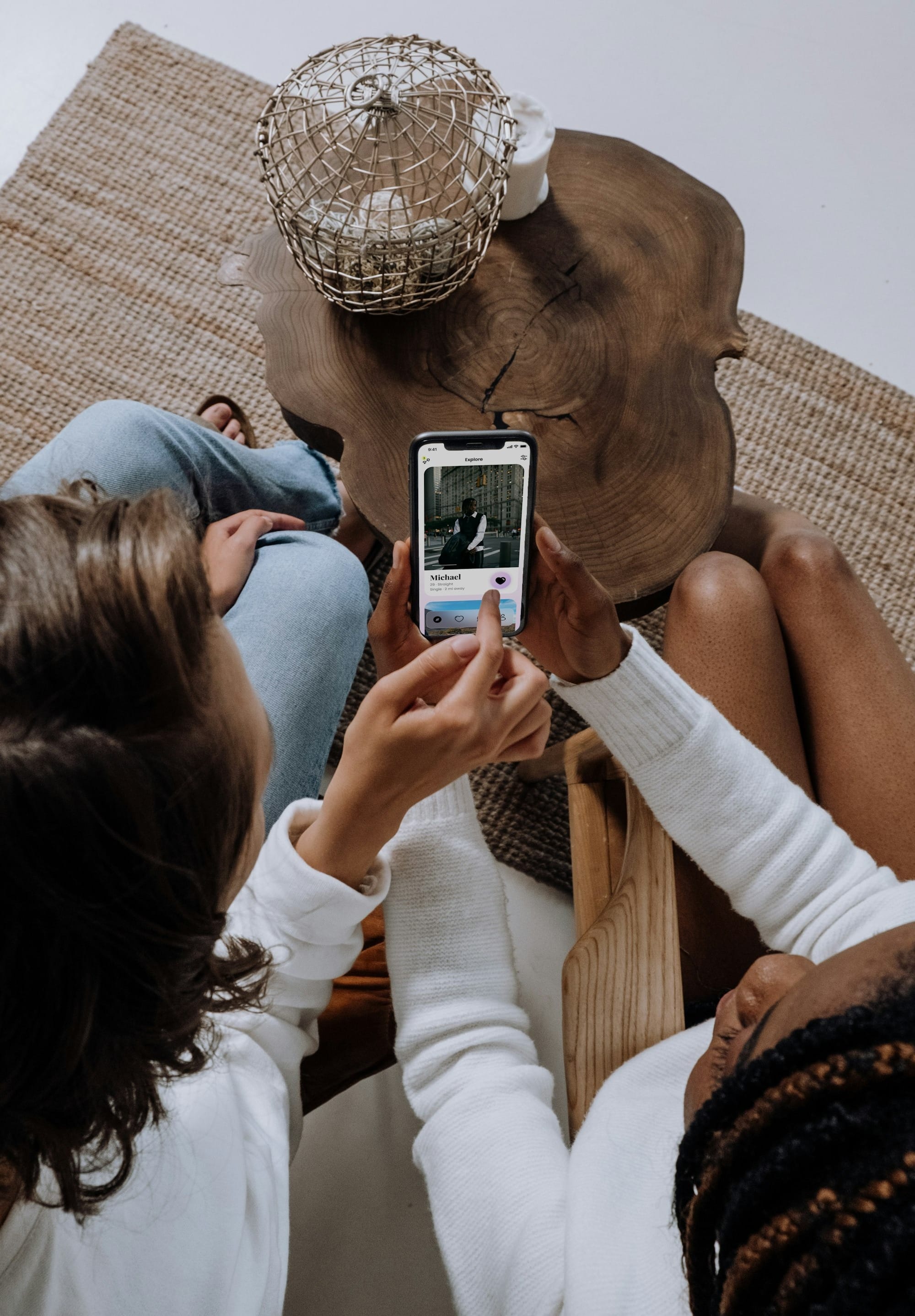
Months ago, I wrestled the idea of going through online dating with a friend. Even when both of us agreed as hardline criticisers of the platforms.
This article is figuring out an answer to my question.
"Should I go onto dating apps?"
This is perhaps the same question that you're wrestle with.
So, let's embark on this journey to figure out an answer.
Why do I avoid dating apps?
I think the most important reason why I avoid dating apps is to protect myself from exposing my vulnerabilities.
Perhaps it's my rational overthinking brain, but I ask myself,
"Why would someone want to date a 20 year-old bank teller who's about to start university and still lives with his parents?"
When you're creating a dating profile, you are listing characteristics that help to communicate value.
And from the limited dating experience and asking people out, it was my in-person confidence and personality that got me in the door not necessarily still images or a list of credentials.
Speaking of communicating value, a friend of mine actually, even though he hates to admit it, found the most success in dating is by treating it like sales.
Having a business background, you can see making a dating profile is marketing, and going on actual dates is having a sales appointment.
Market yourself to create demand (dating profile). Organise appointments (texting). Take them through the sales process (going on a date). Close the deal (getting married). Maintain customer experience (marriage).
For nearly all my life, I've avoided that one-to-many of 'marketing yourself' when it comes to dating.
Like I said, I'm more of a door-to-door salesman. Less quantity in terms of leads, but higher quality conversations between each prospect.
If I want to give myself the best possibility of dating success, I'd rather go in a market that rewards bold action than passive swipes.
And with swiping, there's a bad connotation that come from these platforms where people congregate to engage in hookup culture.
Personally, I don't want my colleagues or peers to see me on these dating apps and have that bad connotation reflect upon me
Truth be told, I'm a Catholic.
I say to myself,
"What would my future wife think? What would she think if she saw me on the apps?"
Because, I am looking for someone who shares my faith and values. Someone who is saving themselves for marriage, like me. And with hookup culture plaguing these dating apps, it's very hard to distance yourself from that association.
I know Christ didn't die on the cross so I can indulge myself in the short-term pleasures of hooking up in which these apps enable.
And sure, you might say that there are people on these apps wanting to find a long-term relationship.
I hope so, but I'm not betting on it.
To me, honour and integrity are important values. Thus, I want to save face not out of pride, but to pursue the kind of dating that reflects these values.
The Case For Bold Action
I sometimes think the context in which you meet your future partner is important in establishing the tone for the relationship.
From high school, I had a hardline belief that if you wanted to ask someone out, you ask as directly as possible.
There is no mistaking the answer to the question of,
"Do they like me?"
(2/6 = 33% success rate)
I recall, after asking someone out, they were ecstatic. You polarised them with bold action which makes you very attractive.
I would rather be the most authentic and best version of myself around this person.
And, do such apps facilitate this boldness?
Why is it brave to ask someone out in person?
It's wrestling with the idea of the unknown, the possibility of rejection.
Even though the outcome of the interaction is not guaranteed, you still face the unknown head on. Many would cower at the thought of facing their inadequacy by a woman which is made immediate by the real-time feedback of in-person interaction.
So, why face such rejection?
Hide behind that screen of yours.
Only read the rejection.
Words hurt less than in the presence of the rejector. Yet, they project the same meaning that hurts oh so much:
"You're not good enough."
What advantage do you have in using dating apps?
With rejection in mind, the unique opportunity dating apps present is the ability to filter out potential matches without such pain.
I mean, directly?
Theoretically, if you swiped on someone and you don't match, it means they didn't find you attractive.
I suppose, it hurts more to be rejected through commission rather than omission because words still carry weight in meaning.
Thus, for this reason, we see the success of dating apps is its ability to eliminate the pain of rejection.
Making it easy to view multiple prospects who are open to dating without constantly feeling down.
(Have you ever had to ask someone out, and they say they have a boyfriend?)
What are the disadvantages of using dating apps?
The culture of it.
"The medium is the message," as the great advertisers describe it.
If the nature of the platform in how you meet and form relationships are fast paced, surface-level, and novel, then how would that reflect upon the very people who use the app?
To put it bluntly, I'm looking for a unicorn, as Alex Hormozi puts it.
A future wife I can enter marriage with, and raise a strong family
As my friend's pastor puts it,
"Rare but there."
The Verdict
I think the question of 'should I go onto the dating apps?' is more asking 'how well will it work for me?'
At this point of my life, dating isn't a priority. If it was, then it would get my attention.
For now, it does not make sense to go onto these dating apps.
That's to say, going on the apps is not a moral judgement, but a matter of experimenting and seeing if it works for you.
(Though I do make a moral judgment about using them for hookup culture)
Maybe, when dating becomes a genuine priority, and I'm the man I need to be, but for now: the answer is no.
"I met my wife on Match.com.
My profile said: 'I'm a medical student with only one eye, an awkward social manner, and $145,000 in student loans.'
She wrote back: 'You're just what I'm looking for.'
She meant honest."– The Big Short