How Living In Japan For Two Months Changed My Life

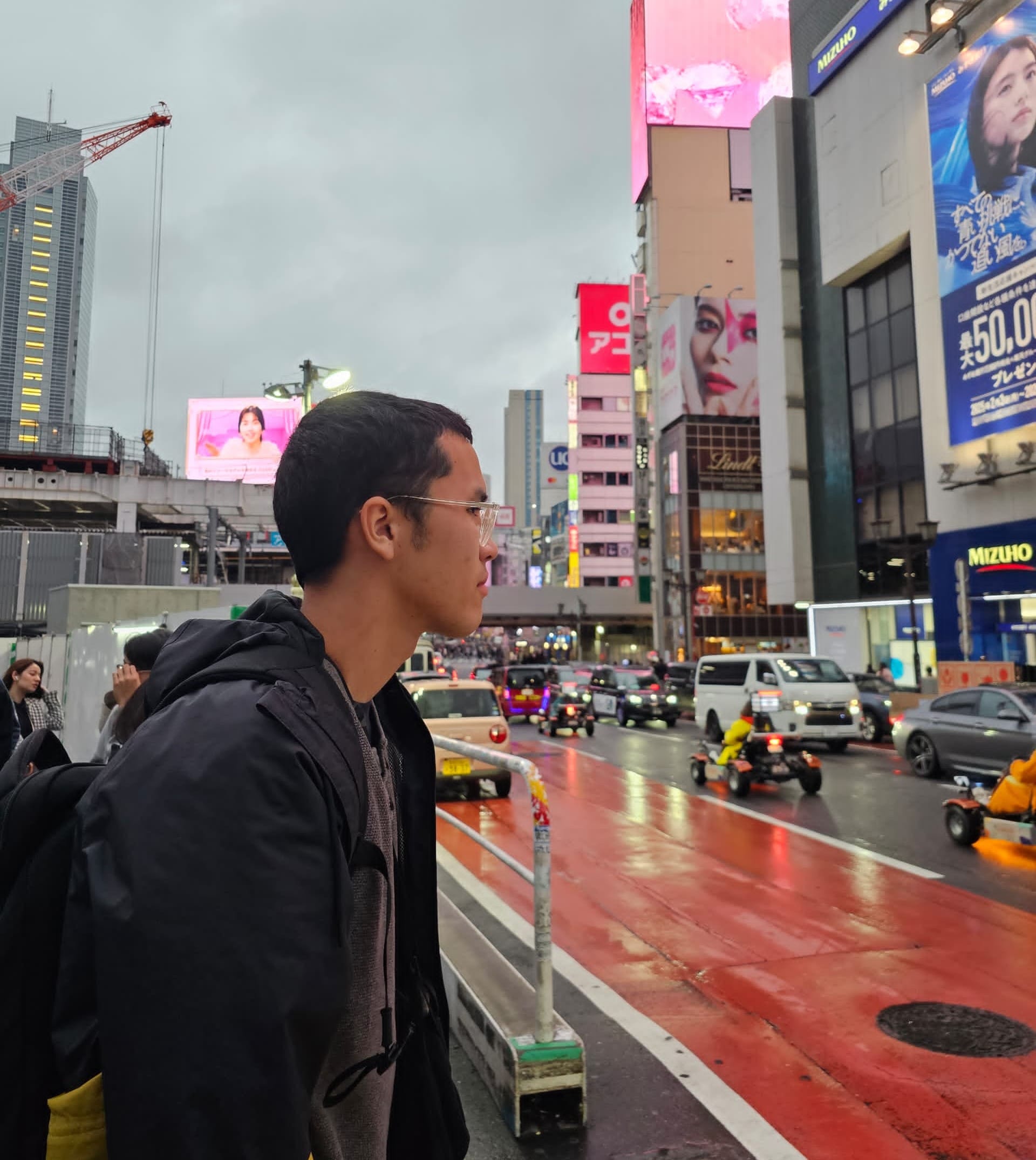
At this point of my life, I had spent months looking for a marketing job after rejecting university to pursue sales.
A prestigious Brisbane agency had asked me to create a power point video presentation pitching myself and to take a personality test.
After that, it was radio silence.
For six weeks, I kept calling them for a follow up. This was how my last call went with them.
"Sorry, the HR department is busy: can I leave a message?"
"Look, I'm calling for a third time and no one has emailed me back."
I was met with passive aggressiveness,
"Look Denzil, I'm just a receptionist. I just leave messages."
(Get out of here kid, you've got no future. – Marty McFly)
That moment, getting shut down by a receptionist, made me realised:
If I wasn't getting this job, maybe I wasn't ready for any marketing jobs.
Until, one morning in October we had a team building exercise at my retail job. One of the managers asked everyone,
"What's on your bucket list?"
I casually said,
"Go live in Japan for a year. Maybe see Joe Hisaishi, a famous Japanese composer's, concert."
I asked myself,
"If my lack of experience stopped me landing the job, what shall I do in the meantime?"
I knew my dream of moving to Japan had to be in a few months. Any longer and I'd keep finding reasons to push it off.
So, I got my working holiday visa, and I booked my one-way ticket to Tokyo for March.
If not now, when? Before more commitments. More responsibility. More to lose.
How Was Job Hunting in Japan?
The biggest obstacle I encountered was my Japanese ability.
I applied to help out at a modern art exhibition. Part of the job was communicating with customers in English and colleagues in Japanese.
I managed to get a call back: they left a voice mail. I pressed replay, and I only understood bits and pieces.
I was absolutely terrified.
I kept replaying the voicemail, getting my phone to transcribe the message to put into Google Translate.
The next day, I put on my big boy pants and called them back.
I can confidently say: I crashed and burned.
The most I managed to say was my name and date of birth.
It took me a good five minutes to realise they were asking for my date of birth when they said 生年月日.
Fear and anxiety stopped me. It's not like in English where you can't choose to not understand what the other person is saying.
After sprinkling a couple of 「分りません」 the recruiter awkwardly stopped the conversation along the lines of,
'If I have trouble understanding, then maybe the job is not for you.'
The level of Japanese advertised was conversational. And I clearly wasn't.
After hanging up, I immediately went to talk with ChatGPT for reassurance of what failure I just encountered.
But, a couple of days later the recruitment team emailed me back asking for the same information they were enquiring over the phone in the form of an online web form.
I'm going to embarrassingly say, I chose not to fill it out. I feared that I would succeed onto the next stage and go to face-to-face interviews and fail there.
I knew what I was doing: taking the easy way out not pursuing the harder path.
After that, I gave up on job searching.
I'm quite privileged in the fact I could fund my now holiday from my savings without the need to work in a foreign country to supplement my travel costs.
What Did I Do in Japan?
After my failed attempt at job hunting, a large chunk of my days was spent video editing.
My routine was: brush my teeth, wash my face, go to the common room. Always sit at the head of the table. Headphones in. Video edit until lunchtime. Then, go visit Sukiya for a quick bite. Go back and edit more until 6–7pm when I'd stop for the day.
For a good week, I spent 5 hours a day editing YouTube shorts helping create 54 unique pieces of content that set me up until August.
I enjoy video editing, at least that's what I tell myself.
Some days, I would spend the morning exploring Tokyo.
By travelling by myself, I was free to explore obscure places in Tokyo without the worry or approval of others.
Deadass, I would open up my Photos app, check the hotspots where I had taken photos on the map, and located places I hadn't been.
These would mostly be parks of some kind.
A lot of walking was involved throughout my days, accompanied by listening to podcasts and music.
I like walking in a foreign place: I get to see another world and people-watch.
Sometimes with good company, hanging out with newly made friends from the hostels.
If you travel alone, I advise booking hostels.
The reason is that you're putting yourself in an environment where you are surrounded by other solo travelers.
80% of all the people I met were because we stayed at the same hostel.
You'll also gel with them because you have something in common:
The ability to travel by yourself.
So if I travel solo again, I'm hitting up the hostels.
(Also, they're a LOT cheaper)
And, the people I met?
Japan attracts travelers from all around the world: Britain, China, Malaysia, Canada, America.
Being younger, I ended up hanging out with people who were five or ten years older.
Perhaps in my nature, I took up the mentee role: asking questions and making them feel listened to.
I would clear my schedule for people who wanted to hang out, because I knew I could leave the country at any time.
I'd rather experience the country with them: an 'us against the world' kind of vibe.
People were grateful I made time for them. I was grateful they made time for me, too.
What Was Communicating in Japanese Like?
In Japan, I feel as though I couldn't spark a casual conversation with the locals the way I could back home.
In the West, you can make small talk with someone and have a good time. Whereas in Tokyo, almost everyone keeps to themselves in their own little box.
My Chinese friend who I met at my first hostel made a good point.
One day in Akihabara, my British-Pakistani friend and I randomly ran into him. We said hi, and without hesitation,
"Okay, I go with you."
During our conversations, he said,
"See if I was Japanese, I would not hang out with you. I would have probably said hi. That's it. But because I am Chinese, I hang out with you."
Looking at my trip, some of the most outgoing people I met were Chinese.
(And for this reason I have to put them in A tier)
The Japanese I spoke? Ordering food and asking about shoes.
In God's cruel way, the most Japanese I spoke was in the last three days in Japan while hanging out with my friend and his girlfriend from Australia.
Translating the costs of karaoke, asking a store employee if we could eat inside, asking for a lost item.
That was it.
Why Am I Choosing to Give Up on Learning Japanese?
You think by going to Japan that my desire to learn the language would grow more.
It didn't.
There's a great burden in knowing that to achieve mastery in any discipline requires discipline: I have to choose where to spend it.
After this experience, I've stopped putting Japan on this grand pedestal. It's not a place I'll work or live long-term.
In fact, my two month stint has grown my appreciation of the West and how I take for granted some of the social freedoms that are not dictated by the collective.
My goal of financial security is far greater than the goal of achieving fluency.
Does this mean I abandon it all together?
My taste in music is deeply Japanese, so I'm still be exposed to it.
With this take, I'm no longer formally learning Japanese per se.
So, what do I want to be great at?
Skills that build a career and create financial security.
Going to Japan didn't kill my love for the culture.
It just clarified where my time is better spent.
What Would I Have Done Differently?
The only thing I would have done differently is spent more time learning how to speak Japanese using something like italki.
Even though I could understand bits and pieces, it doesn't help when you're doing job interviews which require actually speaking to people.
Otherwise, I can safely say that there was nothing I would change about the trip.
I would still book that one-way ticket to give myself time to think when I wanted to return.
Sometimes I think to myself,
"This money I spent for Japan could have gone towards a house deposit, coaching, savings."
Then I'd kick myself. If I hadn't gone, I wouldn't have met the cool people that I did.
I got to enjoy a bit of my youth in a foreign country.
For the older I get, the more responsibility I adopt, the harder it will be to do another trip of this nature.